Showing posts with label mammals. Show all posts

Monday, March 18, 2013

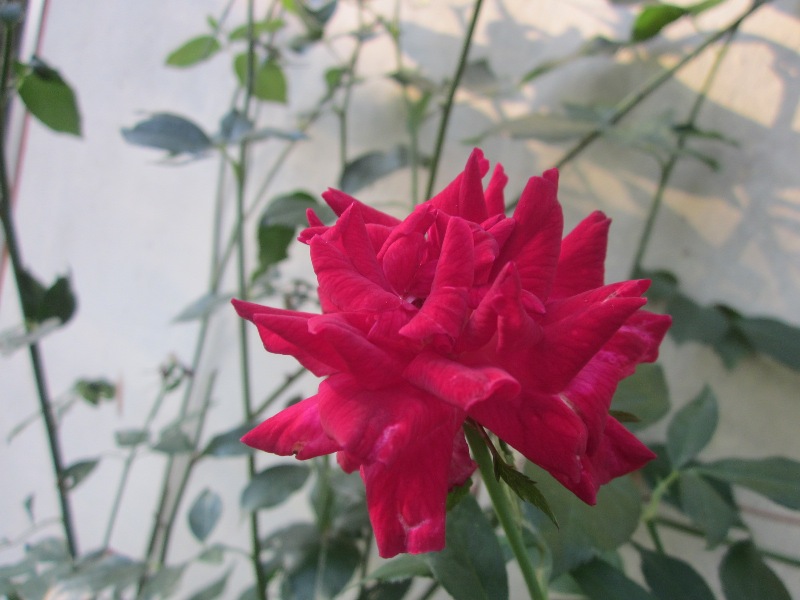
FLOWER'S GARDEN

My Flower's Garden


Tuesday, January 01, 2013

Our Earth Facing Serious Threats


Our Earth is Under Threat.!!


   I love my earth...
I will surely take my own steps to conserve the Resources of our beautiful earth...

   How beautiful is our earth..!

When we see these beautiful pictures from our earth..how we can destroy these resources..
so..always protect these beautiful things...

  Due to the increased pollution,the Biodiversity is decreased day by day...


On earth most of the species of animals,birds,and plants  were facing serious threats of extinction....
Our Efforts can save them....


Our Resources are decreased every day.....


As a Result of these increasing exploitation by the human race, 42% of mammals, 15% of birds and 52% of freshwater fish across the globe  are under threat.
  our single movement or a second thinking will change the future of our planet...

Our earth contains large varieties of plants..
But most of them are in vast extinction.....

Thursday, December 27, 2012

Flying Squirrel

Flying Squirrel


Flying Squirrel


Flying Squirrel Facts

Kingdom:Animalia
Phylum:Chordata
Class:Mammalia
Order:Rodentia
Family:Sciuridae
Genus:Pteromyini
Scientific Name:Pteromyini
Type:Mammal
Diet:Omnivore
Size (H):20cm - 30cm (8in - 12in)
Weight:56g - 175g (2oz - 6oz)
Top Speed:24km/h (15mph)
Life Span:5 - 8 years
Lifestyle:Solitary
Conservation Status:Least Concern
Colour:Black, Brown, Grey, White, Tan
Skin Type:Fur
Favourite Food:Nuts
Habitat:Forest and woodland
Average Litter Size:4
Main Prey:Nuts, Berries, Eggs
Predators:Cats. Coyote, Raccoon
Distinctive Features:Small body size and furry glide membrane


Flying Squirrel


Flying Squirrel


Human Evolution


Human Evolution


Evolution of Man


The story of human evolution began in Africa about six million years ago and it describes the very long process that our ancestors went through to ultimately become modern humans. This process has been uncovered by studying fossils and understanding the underlying theory of evolution, and while new fossils are uncovered every decade revealing new chapters, scientists agree about the basic story.
Evolution means the changes that occur in a population over time. 
evolution is a process that results in changes that are passed on or inherited from generation to generation. It does not, for example, describe how people can change their muscle mass by lifting weights.
Some individuals inherit characteristics that make them more successful at surviving and having babies...
   Biological evolution explains the way all living things evolved over billions of years from a single common ancestor. This concept is often illustrated by the so-called tree of life. Every branch on the tree represents a species. The fork separating one species from another represents the common ancestor that each pair of species shared. So ultimately, all life is interconnected, but any two species may be separated by millions or even billions of years of evolution.


Our Common Ancestor

Most scientists believe our common ancestor existed 5 to 8 million years ago. Then two species broke off into separate lineages, one ultimately evolving into gorillas and chimps, the other evolving into early humans called hominids. In the millions of years that followed, at least a dozen different species of human like creatures have existed, reflected in the fossil discoveries of paleoanthropologists, although many of these species are close relatives but not actual ancestors of modern humans.

Amphibians kingdom

Amphibians kingdom

Frog


      Frog, a small tailless amphibian. Scientifically, there is no distinction between frogs and toads. Both belong to the same order of the class Amphibia, and are collectively called anurans. Popularly, anurans that live in or near freshwater are usually called frogs. They vary in size from certain South American frogs less than one-half inch (13 mm) long to the 10-inch (25-cm) Goliath frog of Africa.


Common Frog, Norway

The Common Frog (Rana temporaria) also known as the European Common Frog or European Common Brown Frog


Bullfrog at DeSoto National Wildlife Refuge


Bullfrog


Spade Foot Toad


  Spade foot Toad, the common name for a family of Amphibians. 
Spade foot toads are widely distributed over Europe, southern Asia, northwest Africa, and North America. The family is named for those members that have a “spade”—a crescent-shaped projection used in digging burrows—on the side of their hind limbs


Spadefoot toads make up the family Pelobatidae. The North American species are all of the genus Scaphiopus.

Now the frogs are also facing serious threats of Extinction...
most of the species are now vanished from planet..
every organisms plays a vital role in the ecosystem.Destruction of any one of these species lead to the Unbalance of the ecosystem..


                          Common Frog Facts

Kingdom:Animalia
Phylum:Chordata
Class:Amphibia
Order:Anura
Family:Ranidae
Genus:Rana
Scientific Name:Rana Temporaria
Type:Amphibian
Diet:Carnivore
Size (L):6cm - 10cm (2.4in - 4in)
Weight:20g - 80g (0.7oz - 2.8oz)
Top Speed:8km/h (5mph)
Life Span:5 - 10 years
Lifestyle:Solitary
Conservation Status:Least Concern
Colour:Black, Green, Grey, Brown
Skin Type:Permeable
Favourite Food:Insects
Habitat:Forests, rivers and marshes
Average Clutch Size:1,500
Main Prey:Insects, Worms, Snails
Predators:Foxes, Snakes, Birds
Distinctive Features:Short back legs and webbed toes

Birds Kingdom

Birds Kingdom


    There Is A large variety of birds worldwide.Birds are often envied for their ability to fly, but not all of them can. Learn how birds can manipulate feathers, bone and wing structure to soar through the air and even dive-bomb into the water for food.


Colchester Zoo

Falcon


Nightingale


Nachtigall (Luscinia megarhynchos)


                        Nightingale Facts

Kingdom:Animalia
Phylum:Chordata
Class:Aves
Order:Passeriformes
Family:Muscicapidae
Genus:Luscinia
Scientific Name:Luscinia Magarhynchos
Type:Bird
Diet:Omnivore
Size (L):14cm - 16.5cm (5.5in - 6.5in)
Wing Span:20cm - 22cm (7.9in - 9in)
Weight:15g - 22g (0.5oz - 0.7oz)
Top Speed:29km/h (18mph)
Life Span:1 - 3 years
Lifestyle:Solitary
Conservation Status:Least Concern
Colour:Brown, Tan
Skin Type:Feathers
Favourite Food:Fruit
Habitat:Open forests and thickets
Average Clutch Size:3
Main Prey:Fruit, Nuts, Seeds, Insects
Predators:Rats, Cats, Lizards
Distinctive Features:Small body size with no markings and thin beak

Common Nightingale (Luscinia megarhynchos)


Common Nightingale (Luscinia megarhynchos)

The nightingale is a small species of bird thought to be formally members of the thrush family. The nightingale is often mistaken for the robin, as the nightingale is about the same size and the female robin is very similar in appearance to the nightingale.
The nightingale is a morning bird and the nightingale can often be heard singing it's loud song at dawn. In urban areas, the nightingale will sing even louder at dawn to make up for the extra background noise.

Albatross


Albatross, a seabird.Albatrosses live almost their entire lives at sea, coming to land only to nest.  During the breeding season, the male performs an elaborate courtship dance. The female lays one white, brown-speckled egg in a shallow nest on the ground.  Both parents incubate the egg for 9 to 10 weeks, until it hatches.  The young remains in the nest until it can fly, about six months later. Adult albatrosses feed on fish, crustaceans, and squid, and often follow ships, feeding on discarded food. Parents feed their young by regurgitating previously digested food into their mouths.

Sailors often refer to albatrosses as “Gooney birds” because of their disregard of danger. They have long had a taboo against killing albatrosses. In his poem The Rime of the Ancient Mariner, Samuel Taylor Coleridge tells of the misfortunes that befell a ship after a sailor defied this superstition and killed an albatross.


FLAMINGO

Flamingo

Flamingos breed in huge colonies, sometimes made up of several hundred thousand mated pairs. The mother flamingo lays a single egg in a shallow mud nest on the ground. Both parents care for the chick for the first week or two of life. Then, the young flamingo joins the crache, which is a large gathering of juvenile birds.

Now these birds are also facing devastating Extinction..